
This article is one of a series covering back pain — causes, symptoms, and the treatments we use at Back and Body Medical in Midtown Manhattan. For the complete overview, see the full guide:
Here at Back and Body New York, we are going to help you understand the vicious cycle if you have a disc problem and how it can lead to further problems with your low back.
Neurosurgeons looked at two different groups of people. Group one had a disc herniation diagnosed and found on an MRI and group 2 had just low back pain, but their MRI showed no disc herniation or problems. They then looked at the cross sectional of two key muscles; the multitudes muscle and erector spinae. Then they looked at the cross section of those two muscles. They found that the people with the disc herniation had atrophy of the erector spinae muscle and the multitudes muscle. They looked at the people without the disc herniation but with low back pain, and found that the cross section of the muscle was fine. Between the two groups, the psoas muscle that is extremely important for the lower back had no signs of degenerative processes or atrophy.
This degenerative process or atrophy, they found a decrease in cross sectional area, and more fatty deposition in the muscle. The study also found that muscle degeneration and atrophy can occur for a time period of about 6 weeks after they have a disc herniation. This is compressing the dorsal nerve root, which is instrumental in controlling the erector spinea and the multifidus muscle.
When you have a disc problem, the two muscles are very key and instrumental in maintaining what is left of the integrity and stability of those two vertebra. If there is a problem between the two vertebra, the muscles are not strong enough to protect it.
Here at Back and Body NY, we have solutions to these problems. Ultrasound diagnostic is used to look at the cross sectional muscle tissue to make sure it doesn’t look atrophy. If after the treatment the patient has a suspected problem, and MRI will need to be done to proceed with your care. An NCVEMG test can also be done that looks specifically at the nerve root and what level of nerve root is being affected. We wrap it all together by providing specific nerve affected exercises for you to do at home. These will fire up the multifidus muscle and the erector spinae.
Watch as Dr David Perna describes this problem in greater depth.
Make and appointment with us here at Back and Body NY if you suspect you have a disc problem or if you are in any type of pain.
Contact us now. We have three simple ways you can make an appointment at our NYC chiro office:
Call now on (212)371 2000 or text (315)873-3095 or email us at Yo**********@***********NY.com
Ready to get out of pain? Most new patients are seen within 24 hours — walk in or book online.
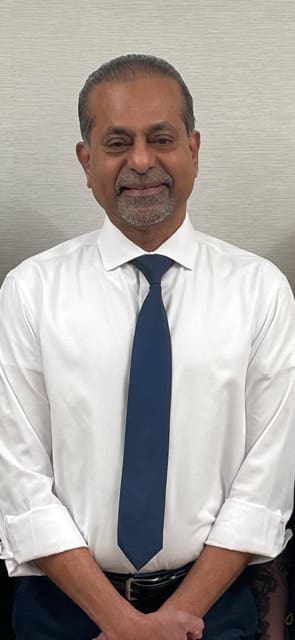
Dr Shan Sivendra MD is the founder and medical director of Back and Body Medical in Midtown Manhattan. A board-certified medical doctor, certified acupuncturist, and Director of House Physicians at St. Barnabas Medical Center, Dr Sivendra has been practicing in New York since 1995.
He completed his residency in Internal Medicine at Saint Barnabas Medical Center (affiliated with Mount Sinai School of Medicine) and received the Resident Research Award for three consecutive years.
Dr Sivendra has a background spanning internal medicine, pain management, and conservative spine rehabilitation, and was licensed in both the US and the UK.
At Back and Body Medical, he leads a multidisciplinary team of chiropractors, physical therapists, and acupuncturists dedicated to helping patients recover from pain without surgery or unnecessary medication.
Further Reading: Back Pain